Essential Nonprofit Operations Tools
Unfortunately, passion and dedication alone are not enough to drive effective nonprofit services. They must be supported by a robust operational framework. Small nonprofits at the beginning are often shoestringing together the least expensive options. Larger organizations sometimes get stuck using archaic systems, because that is “how it has always been done”.
Your nonprofit, regardless of its size, benefits from a suite of digital tools and organizational systems to maximize your impact. These tools should be carefully selected without getting bogged down in overthinking or trying to find the one tool that does it all. The implementation process is critical in getting as much buy-in as possible from the board to the staff and volunteers using it. Followed by training and support to ensure it is being well utilized.
From streamlined communication to meticulous financial management and legal compliance, the right operational infrastructure is the bedrock upon which successful missions are built. Here are some essential tools and strategies that can transform good intentions into tangible, lasting change.
Disclosure: Some of the links in this article are affiliate links. This means if you click on the link and purchase an item, we will receive an affiliate commission at no additional cost to you. We only recommend products or services that we use personally or believe will add value to our readers.
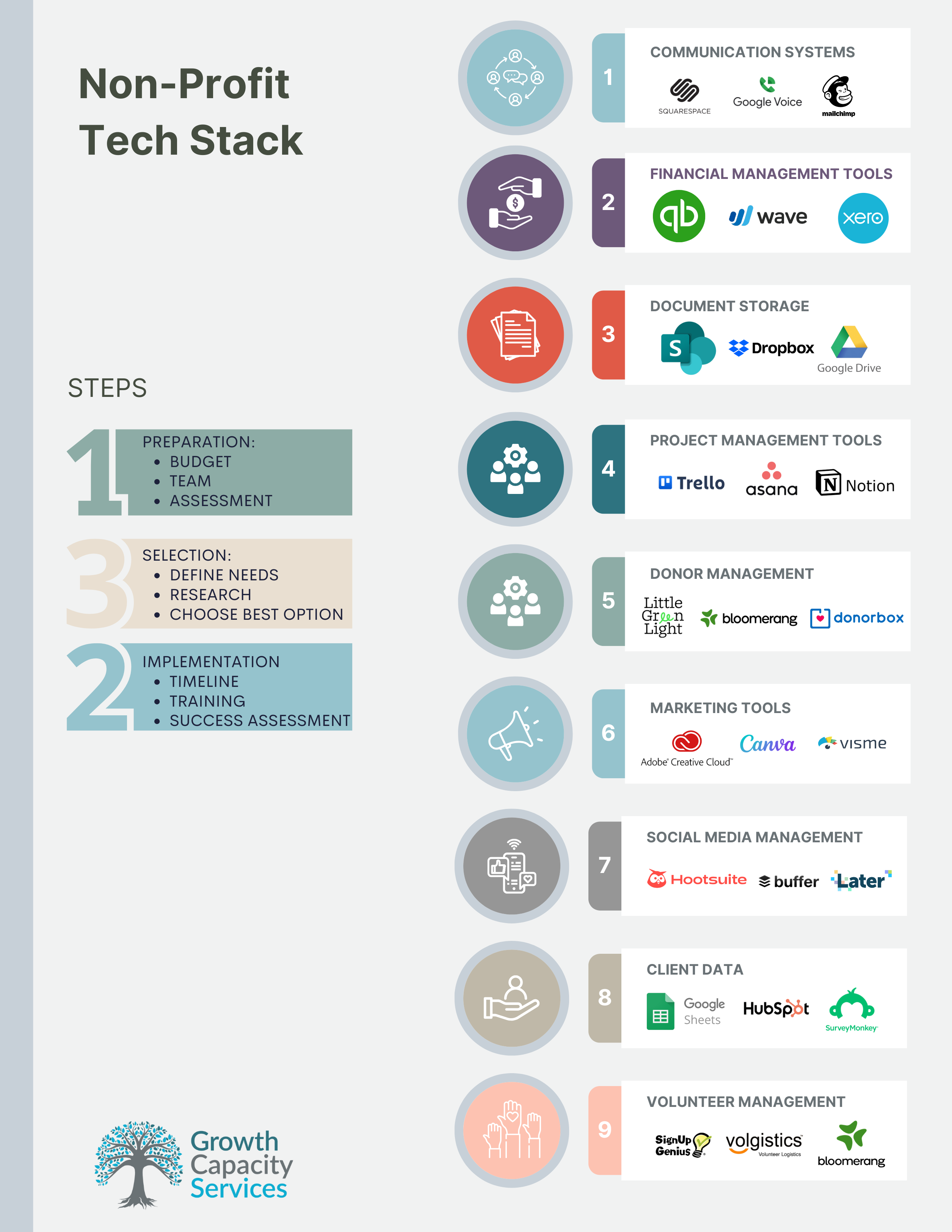
Get your free Nonprofit Tech Stack Checklist and Planner!
Communication Systems
Your communication systems ensure that people (beneficiaries, donors, volunteers) looking for your services or opportunities know how to find you and reach out with questions. Once they have contacted your organization, effective systems facilitate capturing their contact information so you can continually engage with them. Tools are also helpful for internal communications and ensuring important information lives within your organization and not in someone’s personal emails.
These tools include:
Website with clear presentation of the organization's mission and programs, up-to-date information, and user-friendly navigation.
An Email Address that is an organization domain-based email (ie info@greatnonprofit.org).
Email Marketing Platform (Mailchimp, Constant Contact).
Phone or VoIP system with voicemail and call forwarding capabilities if needed. (Google Voice)
Physical Address to receive mail and list in important documents.
Internal Communication Tools (Slack, Microsoft Teams) to centralize communication and to provide project or team specific keeping conversations focused and preventing information overload. These tools can also build community and connections.
Financial Management Tools
Strong financial management systems are critical for nonprofits to keep accurate financial records. This allows for effective budgeting and expense tracking to manage resources wisely and plan for long-term stability. Timely and accurate financial reports provide insights for planning and demonstrate responsible stewardship of donor funds, fostering confidence among supporters. Proper financial systems also ensure organizations meet legal and regulatory requirements, avoiding potential penalties.
Tools include:
Bank Accounts (checking and savings) dedicated to the nonprofit organization.
Bookkeeping software (e.g., QuickBooks Online, Xero, Wave).
Accounting systems, including consistent financial record keeping, best practices, annual budget creation, regular financial reviews, tax filing, and compliance.
-
Online Donation/Payment Processing Platform to accept various payment methods for multiple funding opportunities (donations, recurring donations, event registrations, membership, service fees).
Zeffy, GiveButter
Donor Management System (CRM) for proper donation receipting, acknowledgment and stewardship.
Document Storage
Efficient document storage and sharing are essential for nonprofits because they maintain organizational knowledge in a secure, centralized location. Vital records, policies, and program data are readily accessible and protected. Shared document platforms also enable seamless teamwork, regardless of location, facilitating real-time editing and feedback. Easy access to necessary documents saves time and reduces the risk of lost or misplaced information, allowing staff and volunteers to focus on mission-driven work.
Tools include:
Secure Digital Storage (Google Drive, Dropbox, Sharepoint) with appropriate access to board members, staff, and volunteers.
Policies for filing systems, access, and document retention.
Project Management Tools
Project management tools can streamline complex initiatives and enhance collaboration. They break down large projects into manageable tasks, assign responsibilities, and track progress, ensuring efficient execution. With a centralized platform for communication, file sharing, and task updates, they foster teamwork and promote accountability, ensuring projects stay on track.
These tools (Asana, Notion, Trello) should include features like:
Task Assignment & Tracking to assign tasks to individuals, set deadlines, and track progress.
Kanban Boards/List Views that provide visual representations of tasks and workflows to provide clear overviews of project progress.
Real-time Comments & Notifications with the ability to leave comments on tasks and receive notifications about updates and changes.
Integration with communication tools (like Slack) or built-in messaging features and with file-sharing systems,
Mobile Accessibility for access on the go.
Marketing Tools
Design Software
Online design software empowers your nonprofit to create visually compelling content. Hiring professional graphic designers or marketing agencies can be prohibitively expensive for many nonprofits, especially those with limited budgets. Canva and similar tools offer affordable or even free plans, allowing you to create high-quality visuals in-house, significantly reducing marketing costs.
Nonprofits need to produce a wide range of visual content, from social media posts and event flyers to annual reports and website graphics. These platforms provide user-friendly interfaces and pre-designed templates, making it easy for staff and volunteers with little to no design experience to create professional-looking graphics. This DIY approach allows you to maintain control over branding and messaging, ensuring consistency across all communications while quickly responding to organizational design needs.
I’m personally a huge Canva fan and use it daily for my business and clients. Other options include Adobe Creative Cloud Express, Visme, VistaCreate, Pixlr, Snappa
Many of these platforms offer discounts or free plans for nonprofits, so be sure to check their pricing pages. When selecting a platform consider the ease of use so it matches the skills of your staff and volunteers and collaboration features.
Social Media Management
Social media posting platforms allow your nonprofit to manage its online presence efficiently. These tools can offer the ability to schedule posts across multiple platforms, provide analytics to track performance and engagement, and give access to multiple users. Some will also offer integration with other tools, such as CRM or email marketing platforms.
Buffer, Hootsuite, Sprout Social, Later, Meta Business, Planoly, Tailwind
Client Data
Tools for client tracking and case management in nonprofits are crucial for measuring impact, demonstrating accountability, and improving service delivery. Here's a breakdown of essential features and tool categories:
CRM (Customer Relationship Management)
Data Collection and Evaluation Tools (Survey Monkey, Google Forms)
Database and Spreadsheet Software (Microsoft Excel, Google Sheets, Airtable)
Look for options that provide:
Compliance with data privacy regulations (e.g., HIPAA, GDPR).
Tools for generating reports and dashboards to track client demographics, impact, and trends.
Ability to track and measure client outcomes and impact. systems to create and distribute evaluations, and then to analyze the results.
Volunteer Management
Volunteer management systems streamline the process of recruiting, organizing, and retaining volunteers, which are often the backbone of your operations. These systems help nonprofits post volunteer opportunities, track applications, and match volunteers with suitable roles. They can facilitate scheduling shifts, sending reminders, and communicating with volunteers efficiently.
Tracking volunteer hours, recognizing contributions, and providing feedback can enhance volunteer satisfaction and retention. It is also valuable information to share with potential donors and funders.
Volgistics, SignUpGenius, Better Impact, Salesforce Volunteer Management, Bloomerang, Track it Forward
Key Features to Look For:
Online Application and Registration
Scheduling and Shift Management
Communication Tools (email, messaging)
Volunteer Hour Tracking
Reporting and Analytics
Skill and Interest Matching
Background Check Integration
Event Management
Mobile Accessibility
Customizable Fields
Ability for Volunteers to sign Waivers
Human Resources
Human resource (HR) systems are vital for managing your workforce effectively and ensuring compliance with labor laws, tax regulations, and other legal requirements. Automating HR tasks, such as payroll and onboarding, saves time and reduces administrative burden.
HR systems support recruitment, onboarding, training, and development, helping nonprofits attract and retain top talent. They also provide tools for managing employee data, tracking performance, and facilitating communication once employees are hired.
Proper HR practices reduce the risk of legal disputes and employee grievances and contribute to a positive and productive work environment.
Essential HR System Components
Payroll with automated payroll processing, tax calculations, direct deposit, and compliance with payroll regulations.9
Online Handbooks and Policies that provide centralized access to employee handbooks, policies, and procedures.
Automated Onboarding Workflows, including document collection, training assignments, orientation, and introductions.
Training and Development including learning management systems (LMS) for delivering online training courses. Tracking of employee training and certifications and performance management systems.
Benefits Administration, including management of health, retirement, and other employee benefits.16
Time and Attendance Tracking, including systems for employees to clock in and out, and for managers to track time off.
Applicant Tracking Systems (ATS) to help to manage job postings, and track applicants through the hiring process.18
(BambooHR, Gusto, Justworks, Workday, Paychex Flex, Zenefits)
Fundraising and Development
Fundraising and grant management systems are vital for nonprofits to secure the resources necessary to fulfill their missions. These systems:
Enhance financial accountability: They provide clear reporting on fundraising efforts and grant expenditures, ensuring transparency and compliance.
Improve grant application processes: They help manage grant deadlines, track applications, and organize required documentation, increasing the likelihood of successful funding.
Enable data-driven fundraising: They offer insights into donor behavior and fundraising trends, allowing nonprofits to optimize their strategies.
Fundraising Plan:
A fundraising plan is absolutely essential for nonprofits because it provides a roadmap for securing the financial resources needed to sustain their operations and achieve their mission. It provides a clear framework for fundraising activities, ensuring alignment with the organization's overall goals, outlining strategies, creating a timeline, and establishing measurable metrics. The plan should identify potential donors, (individuals, foundations, corporations, and government agencies) and strategies (individual giving campaigns, grant writing, corporate sponsorships, fundraising events, and earned/program income). Without a plan, fundraising efforts can be scattered, inefficient, and ultimately unsuccessful.
(Google Sheets, Microsoft Excel, Project Management Tools (Asana, Trello), Canva)
Grant Management:
Effective grant management is crucial for nonprofits because it keeps all research, deadlines, and applications organized and accessible to staff and volunteers involved in the process. It also ensures compliance with grant requirements such as use of funds and program results.
(GrantHub, Instumental)
A few other tools to consider:
Grammarly- an AI-powered writing assistance tool that helps users improve their writing with spell-checking and grammar correction to provide comprehensive feedback. You can install it to check writing for your emails, blog articles, website content, donor letters, and more.
Online printing sites (VistaPrint or Moo)
As you look for software and tools to support your nonprofit's operations, be sure to research which tools best meet your needs, whether they offer discounts or free plans to nonprofits, and how well the tools integrate with each other. Make a plan for implementation so that your team and volunteers have the needed resources allocated, potential challenges have been addressed, and everyone is informed and bought in throughout the project.
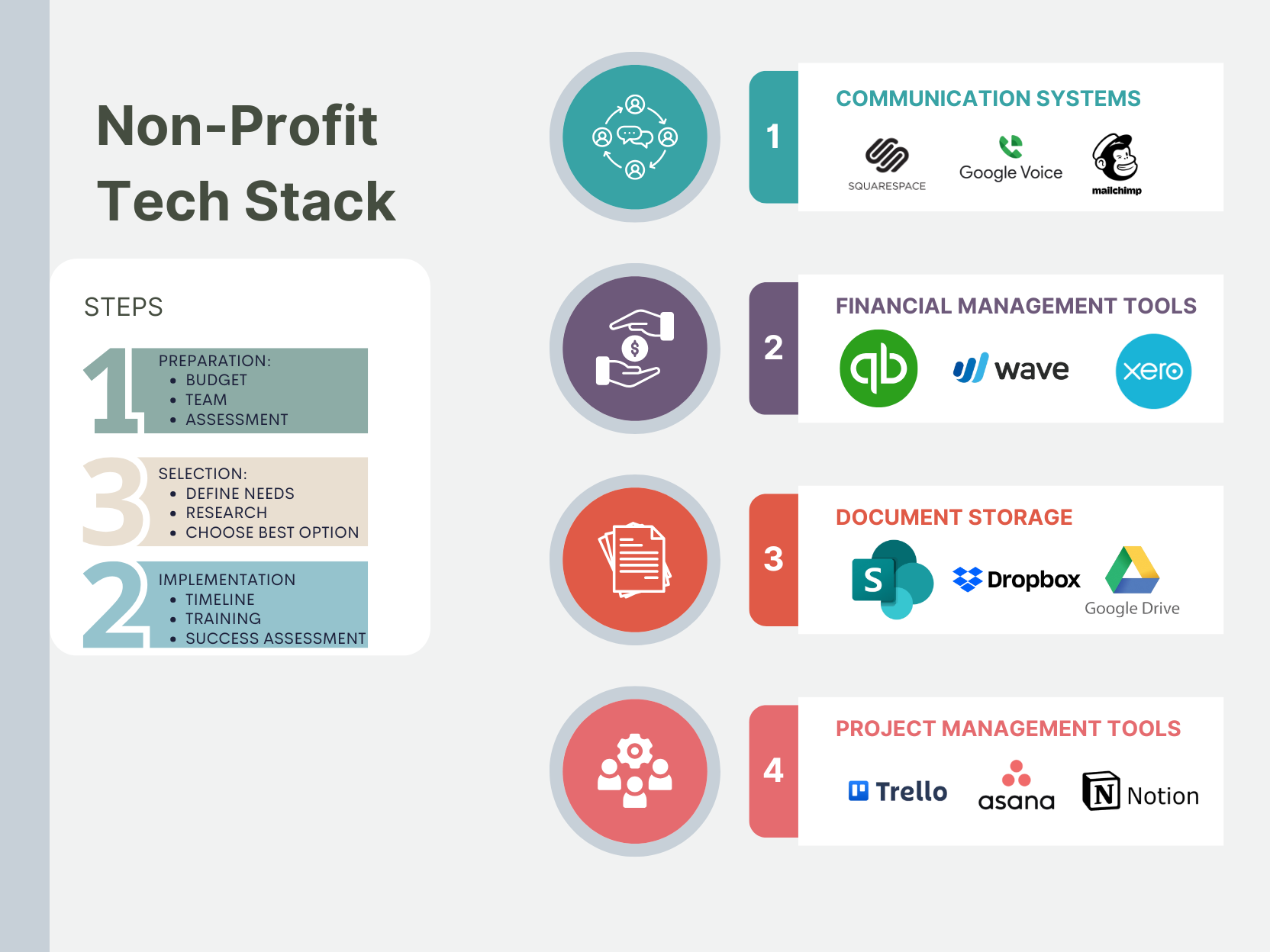
Get your free Nonprofit Tech Stack Check List and Planner!
Have questions or want support in your tool selection or implementation process? Reach out to hello@growthcapacityservices.net
Disclosure: Some of the links in this article are affiliate links. This means if you click on the link and purchase an item, we will receive an affiliate commission at no additional cost to you. We only recommend products or services that we use personally or believe will add value to our readers.
Articles by Category
Step-by-step instructions to help your organization grow!